

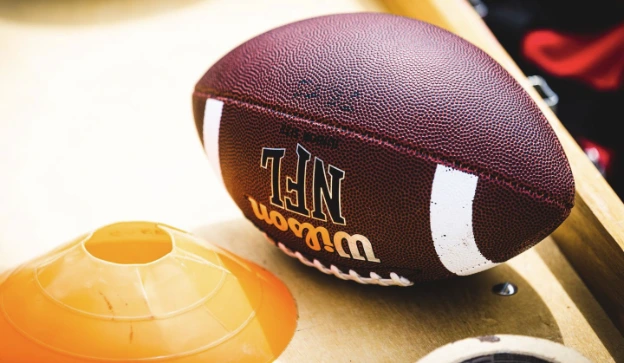
Fanatics Sportsbook has joined DraftKings and FanDuel as an official NFL sports betting partner for the 2026 season. For a poker player accustomed to checking the games, software and payment options behind a familiar room name, the announcement invites a similar look at what sits behind an NFL partner badge.
Fanatics gains rights to promote its relationship with the league and access to certain official game data. DraftKings and FanDuel have renewed their agreements. Fans may see all three brands more prominently around NFL coverage, but the experience of using their apps still depends on what is available for a particular game and how each app handles a selection.
Fanatics Adds Betting to an Existing NFL Relationship
Fanatics was already part of the NFL’s commercial world through merchandise and collectibles. Its new multi-year agreement brings Fanatics Sportsbook into the league’s official betting-partner group for the first time. DraftKings and FanDuel, partners in this category since 2021, have each signed new multi-year agreements. The NFL’s announcement sets out the rights shared by all three.
They can use NFL marks in sports betting promotions, promote online and retail betting, and appear at events such as the Super Bowl and NFL Draft. Their brands can also be integrated into NFL-owned digital media. A fan checking league coverage during a game may therefore encounter a sportsbook name alongside information they came to read or watch.
Official game information forms another part of the arrangement. Through Genius Sports, the league’s exclusive data distribution partner, all three operators can access real-time play-by-play statistics, proprietary Next Gen Stats and BetVision. Timely information is relevant to a sportsbook displaying markets as a game unfolds. The NFL describes access to these products; it does not specify which features each operator will show in its app, or whether they will appear for every game.
That leaves plenty for a player to discover by opening an app. The NFL mark establishes a formal relationship with the league. It cannot tell someone whether an unusual player prop is listed for Sunday’s game, how many steps it takes to find it or what price appears on the bet slip.
Put the Partnership to a Game-Day Test
Consider someone looking for a player prop shortly before kickoff. They locate the game, search the available markets, check the selection and inspect its price. After submitting a bet, they need confirmation that it was accepted. Later, they may return to their account history to find the result. An app can feel straightforward at one of those steps and cumbersome at another.
Covers, a sports betting publisher that conducts hands-on app tests, includes Fanatics, DraftKings and FanDuel in an updated comparison of US sportsbooks. On August 27, 2026, its reviewers searched for the same predetermined player prop during a Bills–Steelers preseason game. They found it in 18 seconds on FanDuel, 21 seconds on Fanatics and 25 seconds on DraftKings. The test used an iPhone 14 on Wi-Fi in Baltimore, and each timed measure was repeated three times. A player using another phone during a regular-season game could have a different experience.
The other results complicate any simple ranking. DraftKings displayed 186 markets for that game, compared with 171 on FanDuel and 114 on Fanatics. FanDuel settled the measured wager fastest. Bet365, another app in the test, recorded the quickest bet acceptance. Someone searching for a less common market might take more interest in the market counts; someone placing a familiar selection might care more about finding it promptly.
Finding a player’s name is not necessarily the same as finding the same wager. Suppose two apps list a receiving-yards prop for him, but one sets the threshold at 59.5 yards and the other at 64.5. Comparing their prices alone would be misleading: the receiver has to produce a different result for each bet to win. The threshold can be easy to overlook in a long list of props, particularly when both entries sit under the same player’s name.
The Covers results describe one game, device, connection and testing window. Market counts and app performance can change with those conditions. The value of the test lies in showing exactly what the reviewers tried and measured, allowing a reader to decide which results relate to the task they care about.
What a Poker Player Would Check Beyond the Badge
A poker room can have a well-known name yet lack the game a player wants at the hour they normally play. The software might suit one person’s habits and frustrate another’s. Sportsbooks offer different products, but the same attention to the experience behind the branding is useful when comparing them.
For a particular NFL selection, that means checking three things:
- The market itself. Is the player prop available for this game, and does each app set the same threshold?
- The price on the bet slip. Prices can change. Compare the offers for the same selection at roughly the same time, rather than relying on a general claim about an app’s odds. A price seen earlier in the day may no longer be available when the player reaches the bet slip.
- The account record. After a bet is accepted, can the player see the confirmed selection, its price and, later, how it was settled?
The poker comparison goes only so far. A poker player weighing whether to call is working with a pot size, a bet size and an estimate of hand equity. A sportsbook presents a price for an outcome in a sporting event. Familiarity with poker odds does not by itself answer whether that price is attractive.
Nor does a shared brand make the sportsbook and poker room identical experiences. A company might offer both, yet its NFL markets reveal little about which poker tables are running or who is playing at them. For someone who uses more than one product, each deserves its own assessment.
The Agreement Sets Boundaries as Well as Rights
The three partners agreed to follow the NFL’s game-integrity policies and cooperate on information sharing and responsible gambling initiatives. The league says this includes working together to prohibit wagers it finds objectionable. It identifies bets tied to officiating and injuries, along with outcomes that could be known in advance or easily manipulated by one person.
That commitment has a consequence a player may notice: an incident that can be discussed during a broadcast will not necessarily be available as a betting market. The NFL announcement identifies types of wagers it wants excluded, though it does not provide a full menu of what each partner may offer.
The league also describes monitoring suspicious betting patterns with Genius Sports. Its wider integrity program involves regulators, third parties and representatives assigned to individual clubs. NFL players, coaches, officials and staff must complete annual training on the league’s gambling policy. These measures predate the addition of Fanatics, but the new partner has agreed to work within the league’s stated approach.
The promotional rights are likely to be easier for a fan to spot than that work. The policies are still part of the terms behind the three official partner names, and they help explain why some conceivable bets will not appear beside the more familiar game and player markets.
A Large Market and a Small Decision
The American Gaming Association reported that US state-regulated sportsbooks took $166.94 billion in wagers during 2025 and generated $16.96 billion in revenue. Those national figures predate Fanatics’ NFL agreement. They give a sense of the business behind the league’s partnerships, without measuring any effect of this particular deal.
On a Sunday, a player’s comparison may come down to two receiving-yards lines on two phones. Fanatics’ new designation explains why its brand might appear beside DraftKings and FanDuel in NFL coverage. The player still has to read the number beside the receiver’s name, the price attached to it and the confirmation on the screen before treating the offers as the same bet.