
What Will I Learn?
Online poker players are used to having a huge amount of data to look at when analyzing play. Hand histories are an integral part of poker study, and looking over spots to work out where you went wrong is one of the quickest ways to get better at the game.
Poker platforms therefore provide all of this data to players because it doesn’t cost them anything if players improve. In fact, the more successful players there the more fish are attracted to the game – which keeps the cycle going.
Yet anyone who has even dabbled in the world of online casino games knows that there is a huge gap between the data available to casino and poker players. This article will explore the reasons why that is, covering a mix of probability and game design, economics and psychology.
Poker Data is Incredibly Detailed and Analysis is Complex
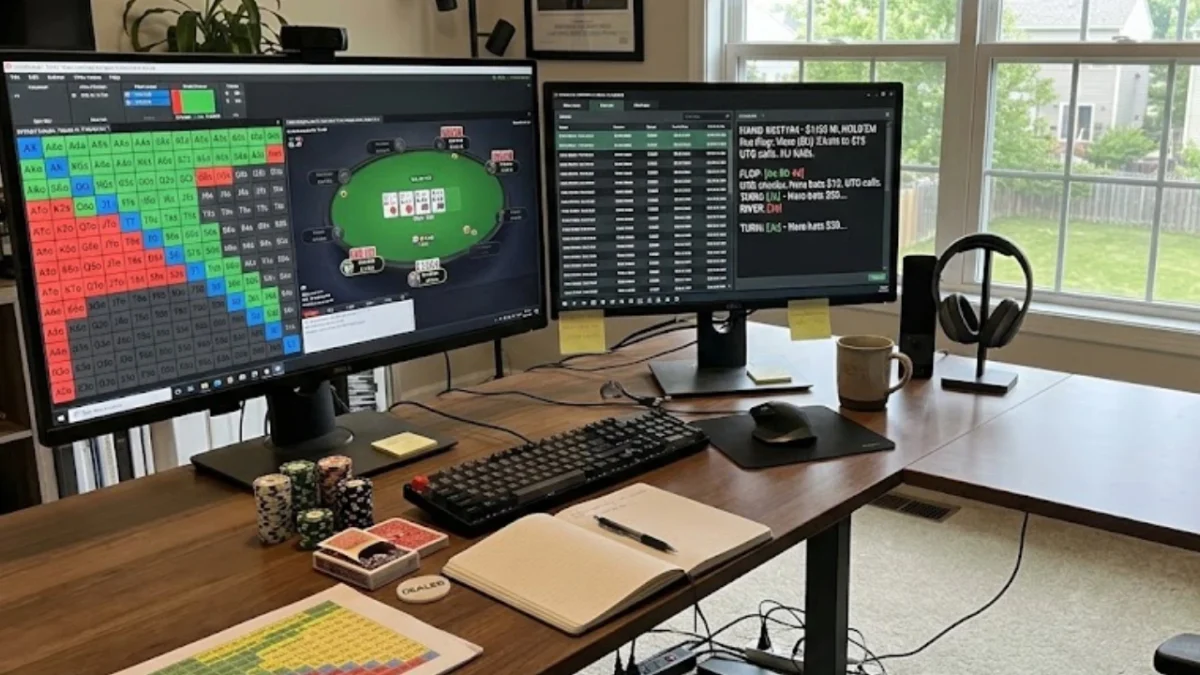
Poker sites not only offer their own tools for looking at data, but also ways to export hand histories for independent analysis or using third-party programs.
Poker hand histories contain a multitude of information including:
- Hole cards
- Board cards
- Position
- Stack sizes
- Time banks
- Bet sizes
- Showdown results
These can then be aggregated into a frankly bewildering array of personalized statistics including VPIP, PFR, aggression, bankroll performance in cash games, average results in tournaments and more.
The reason poker players study and analyze all this is to make fewer mistakes. Players at the highest level often compare their stats to the Game Theory Optimal performance metrics, ensuring they are completely balanced and unexploitable.
On the other hand, data on the player pool at particular stakes can also be used to build exploit strategies which rely on aggressively punishing repeated mistakes from fish or even regs.
The point is poker data is rich and complex enough to allow complex analysis of play, whether that’s exploiting low stakes with aggressive C-betting or playing perfect robot-like GTO poker with finely balanced ranges and frequencies.
Casino Games Are Almost Impossible To Make a Living From
That kind of data is rarely seen at casinos. Poker is a different game in terms of skill and luck. A game in which you can make a huge mistake at almost any time and lose your whole stack. If you’re skilled and eliminate mistakes almost entirely you can build an edge where you will dominate in the long run.
Luck plays a role of course. Sometimes, AA will lose 7-2 off suit all in. Every poker player has bad beat stories by the dozen. If you trust the process and repeat a winning EV play again and again, over time, you can make a side income or become a poker pro.
This is simply not possible in most casino games in the current era. In slots, it should be quite obvious, even with the best bonuses. Picking the right bonuses and the game makes a difference, but once you sit down it’s hit and hope. In blackjack, using basic strategy can significantly reduce the house edge, although the exact return depends on the game’s rules. Unlike poker, where players compete against each other, most casino games have a built-in mathematical advantage for the operator. And there are only so many operators until you’ve claimed all the first deposit bonuses available in your jurisdiction.
Some people grind poker for a living, and some become hugely successful. You won’t find too many people who consider casino gambling a career, outside of modern day gambling influencers that is.
Unlike poker hand histories, most publicly available casino data focuses on the games and operators rather than individual player performance. Information such as RTP, withdrawal limits and payment conditions can still help players compare platforms. For example, coming across the highest payout online casino depends on a few variables, including the games available and their theoretical returns. However, these comparisons don’t provide the same insight as having access to a detailed record of your own betting activity.
Casino Data Is Kept By The House
The difference isn’t that casinos lack data on player results. Many sites will tell players things like:
- Your net deposits or win/loss
- Every single individual bet you placed sometimes going back years
- Session time reminders
However, none of it is easily exportable for independent analysis and a lot of it isn’t very detailed. For example, if you wanted to find out your exact win loss on a particular slot game you would have to manually go through your bet history (if it’s even offered at all) and then paste that into a spreadsheet or database for analysis. Same goes for realised EV of each activated bonus per game.
At some sites, players may get little to no data at all except their deposit and withdrawal histories. Meanwhile the casino has a huge amount of data on each player. So why don’t they share it as openly?
One explanation is that poker and casino games serve different purposes. Poker hand histories allow players to review decisions against other players, while detailed slot results cannot reveal a strategy for overcoming a properly functioning game’s mathematical house edge. Casinos still collect extensive transaction and gameplay data, but the information made available to customers varies between operators. Providing clearer, downloadable records could help players understand their spending and playing habits, even where the results offer no competitive advantage.
As mentioned there is basically no currently known way of getting an edge on most casino games without cheating, and players know this. Casino gambling should be fun entertainment – accepting the risk in return for an unlikely reward and the experience of playing the game.
Casino Fans Can Still Get Value from Their Data
So what could casino gamblers stand to learn from sites that provide better personal records, or if releasing such data was more widespread in the business?
Some possible useful metrics that casino data could provide from player analyses include:
- Game-by-game win/loss
- Average session length
- Average stake
- Overall account win loss
- Total winnings per activated bonus
These can also be compared, contrasted or compiled. For example a blackjack player looking at average win loss compared with session lengths could work out at what point they start making worse decisions. Or a card player might use the data to decide whether they are potentially better at blackjack or casino poker.
While they can’t create a mathematical edge over the house, they can be useful for understanding behavioral patterns and coming to an estimate of returns over individual sessions.
On the subject of RTP, this is one metric you’ll see a lot of casinos provide – especially for slots. Return to Player is the average return per $100 wagered. Many slots go as high as 95% or more.
While higher RTP is better, it can only tell you so much. Many casino slots today have very high variance, which means many more spins lose but winners tend to be bigger. And in those cases, a lot of the RTP is locked up in one big win. This is an important aspect to consider when calculating the EV for deposit or reload bonuses, and whether they’re profitable in the long run.
Players might think 97% RTP means they’re likely to get $97 back from a $100 session, but that’s not how it works. RTP is calculated over a very large number of wagers, and individual results can vary considerably. High-volatility slots can produce long losing streaks alongside occasional large wins, making short-term results particularly unpredictable.
This demonstrates that casino gambling stats, as well as poker to an extent, can be misleading. However, there are genuine uses for them in each case, even if they are different. It will be interesting to see if any state or global regulator decides one day that players should have more access to their casino gambling data and results history. If gambling operators started doing this, it might lead to more bonus abuse though, as screenshots of winning stats would spread over social media.