

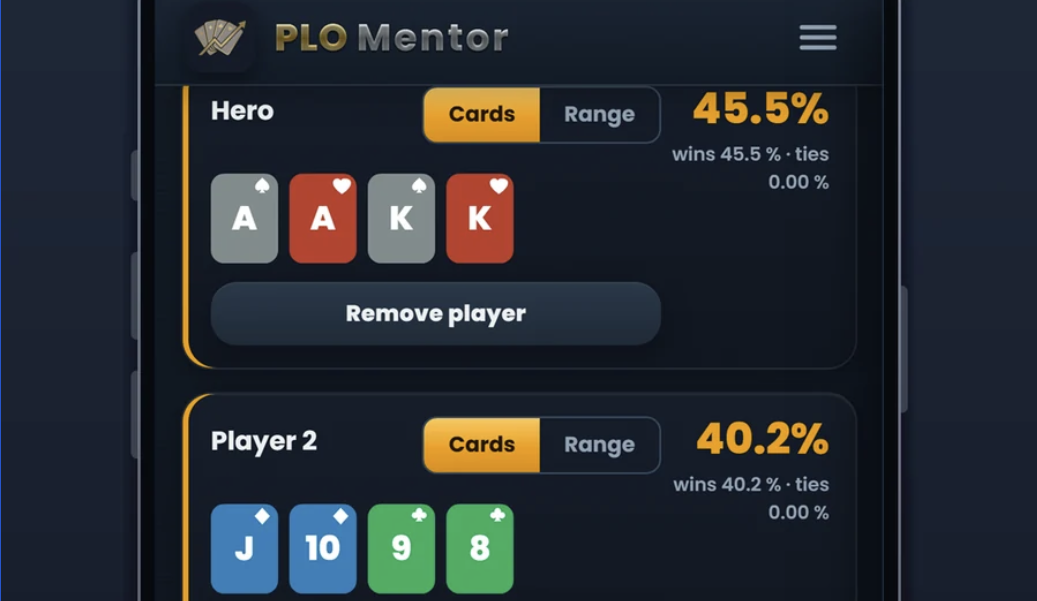
Poker has changed dramatically over the years. Beginners today have access to more information than ever before. Instead of relying mainly on poker books, advice from experienced players, and hours spent at the table, modern players can use videos, training sites, statistics, hand charts, and powerful poker software to improve their game.
This has made learning poker easier in many ways. At the same time, it has changed what players actually need to remember.
Years ago, a serious poker player might spend hours memorizing starting-hand charts, poker odds, and different betting strategies. Today, many players use tools that help explain these concepts and show them how different hands should be played.
How Poker Is Studied in 2026
The way players study poker today is very different from the past.
A beginner can now learn the basic rules and strategy online before ever sitting at a real poker table. There are thousands of videos, articles, courses, podcasts, and training programs covering everything from basic hand rankings to advanced strategy.
One of the biggest developments has been the use of poker solvers. Programs such as PioSOLVER or GTOWizard can analyze poker situations and calculate strategies based on game theory. They can show players how often a hand should bet, check, call, or raise in specific situations.
Players can also review their own hands after a session. Instead of simply wondering whether a particular decision was good or bad, they can enter the hand into software, investigate what happened and come to a solid fundamental conclusion.
Modern poker study often involves learning basic strategy and poker terminology, studying pre-flop hand ranges, reviewing hands played during sessions, watching professional players, using poker solvers to study difficult and unique situations, practicing common situations repeatedly and getting insight on how opponents tend to play and how to exploit the masses.
This means players can spend less time memorizing thousands of individual situations and more time understanding the principles behind them.
Building Poker Intuition
For beginners, poker can initially feel like a game with an enormous number of rules.
You might wonder whether you should bet or check, how much to bet, whether your hand is strong enough to call, or what your opponent could have.
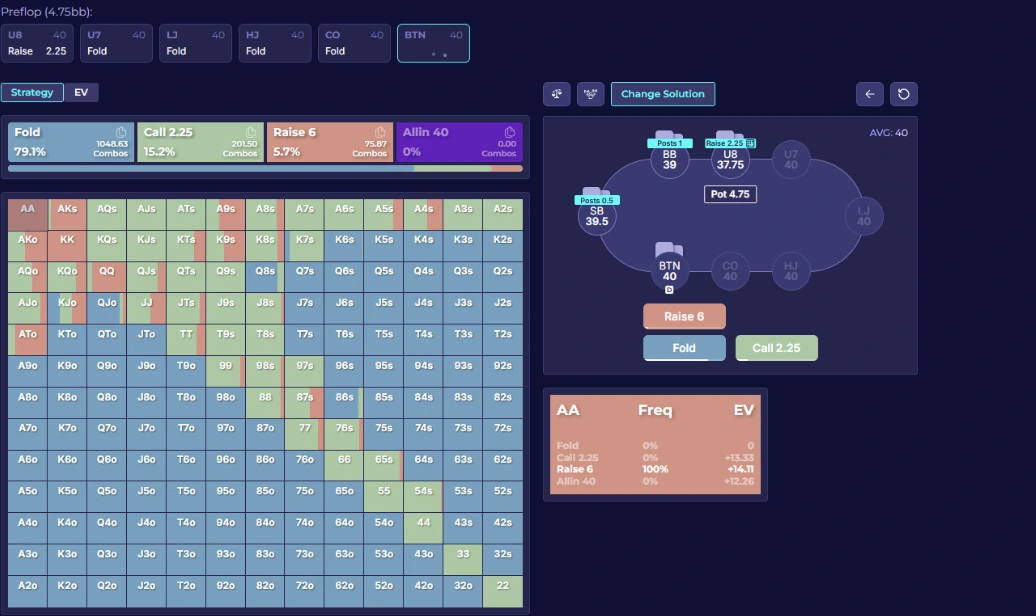
Here is a picture of a simulation and solver output. As you can see, instead of remembering exactly to only call a specific hand, you are given a range of hands and how to play them in perfect equilibrium. This will help you build intuition and understanding of similar spots in the future that perhaps you haven’t seen the exact simulation for.
So, are modern players learning more while remembering less? And how much does that actually matter?
With enough study and experience, many of these decisions become more natural. This is what poker players often describe as intuition.
For example, a beginner might need to carefully think about whether a pair of aces is strong enough to continue on a particular board. An experienced player will recognize the situation much faster because they have seen similar hands hundreds or thousands of times.
Modern poker tools can help players develop this understanding. Instead of simply memorizing that one particular hand should be played in one particular way, a player can study why the decision makes sense.
This is especially useful for beginners because understanding the reason behind a strategy is usually more valuable than memorizing a long list of instructions.
Takeaway
Hammering home the principles and enabling players to read the board and make situational calls without needing a whole library of information in your head is a real positive. It also works well whether you’re playing at a land-based casino or at the online live casino on Tikal Casino. Combining tools with our innate ability to develop strategy-based intuition takes the sting out of improving poker skills.
Are Players Remembering Less?
There is, however, a downside to having so much information available.
When software can calculate ranges and statistics for you, it becomes tempting to rely on the software rather than developing your own understanding. This can become a problem when you are actually playing.
You cannot stop during a live poker hand and run every decision through a solver. You need to recognize the situation, estimate your opponent’s range, consider the pot size and stack sizes, and make a decision within a limited amount of time.
This is where memory and experience still matter. A player should not necessarily try to memorize every possible poker situation. Instead, it is more useful to remember the important concepts from the bare basics to more advanced concepts like which hands are generally strong starting hands, how position affects the strength of your hand, why bet sizing matters, how to calculate pot odds, which board favours the aggressor and when a hand is strong to enough to build a big pot.
Knowing these fundamentals allows you to make decisions even when you do not have a chart or piece of software in front of you.
Learning From Your Own Mistakes
One of the most valuable forms of poker study is simply reviewing hands you have already played. Beginners often remember winning hands because they feel good and losing hands because they feel frustrating. But the result of a hand does not necessarily tell you whether you played it correctly.
A hand that you won could have been played badly, while a hand that you lost could have been played perfectly. Instead of asking only did I win, try asking did I make the best decision with the information I had.
Reviewing difficult hands can help you identify patterns in your game. Perhaps you call too often when facing large bets, play too many hands from early position, or become too aggressive with top pair. Once you identify these patterns, you can focus your study on fixing them.
Technology Is a Tool, not a Replacement
Modern poker players have an enormous advantage when it comes to learning resources. A beginner can study a concept in the morning, watch professional players demonstrate it in the afternoon, and review their own hands in the evening.
However, technology does not replace actual poker experience.
The strongest approach is usually a combination of study, practice, review, and repetition. Poker software can tell you what happens in a particular situation, but you still need to understand how to apply that information at the table.
The goal is therefore not to remember everything. It is to understand the most important concepts well enough that they become second nature.
Modern poker may involve more studying than ever before, but that does not mean players need to fill their heads with endless charts and numbers. The most useful knowledge is the knowledge that helps you make better decisions when the software is no longer there to help.
In that sense, modern poker players may be remembering less—but if they are remembering the more important things, they can still become much better players.